|
SIERRA
LEONE GOVERNMENT
DEFENCE
WHITE PAPER
Informing the people
Prepared by the
Directorate of Defence Policy
Ministry of Defence
Tower Hill
Freetown
MISSION STATEMENT
The
Ministry of Defence is established to formulate,
implement, monitor and evaluate strategic defence
policy for the Republic of Sierra Leone Armed
Forces that is effective and fostered within a
framework of democratic governance.
OBJECTIVES:
Ø
Formulate and implements strategic Defence Policy.
Ø
Develop and maintain a re-structured and robust
RSLAF that is well trained, well disciplined and
well cared for.
Ø
To equip and provide logistic support to the RSLAF.
Ø
To transform the RSLAF into an organisation that
is accountable, incorruptible and subject to democratic
control.
Ø
To continually evolve and improve the RSLAF.
Ø
Deliver the endorsed Defence Missions and Military
Tasks.
CONTENTS
Forward
by His Excellency the President
Chapter
1 - Strategic Context
Chapter 2 - Transformation
Chapter 3 - Reform
Chapter 4 - Republic of Sierra Leone Armed Forces
Chapter 5 - Defence Expenditure
Chapter 6 - Defence Support
Chapter 7 - Conclusion
Appendix
A - Defence Missions and Military Tasks
Appendix B - Ministry of Defence Directorates
Appendix C - Ministry of Defence Committees
Appendix D - Republic of Sierra Leone Force Structures
Appendix E - Medical Services
DEFENCE
WHITE PAPER
FOREWORD
The publishing of this White Paper signifies a
new era in Sierra Leone Defence. An era that will
see security and stability, which we h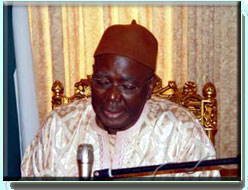 ave
not seen for many years, returning to our country.
The profound social and political upheavals our
people so tragically endured are past. Following
free and fair elections in May last year Sierra
Leone can look forward to again becoming a prosperous
and vibrant coutry. It will not be an easy road,
it will take time. The Republic of Sierra Leone
Armed Forces (RSLAF) will play a vital role in
helping us make that journey by keeping everyone
safe and secure. ave
not seen for many years, returning to our country.
The profound social and political upheavals our
people so tragically endured are past. Following
free and fair elections in May last year Sierra
Leone can look forward to again becoming a prosperous
and vibrant coutry. It will not be an easy road,
it will take time. The Republic of Sierra Leone
Armed Forces (RSLAF) will play a vital role in
helping us make that journey by keeping everyone
safe and secure.
We
are committed to national reconciliation and unity.
A dramatic illustration of this is the integration
of ex-combatants into the new Republic of Sierra
Leone Armed Forces. Armed Forces that function
and operate within the law, that are loyal, accountable
and subject to the control and oversight of the
democratically elected and appointed Government.
With
openness, responsiveness and accountability forming
the cornerstone of Government policy this White
Paper sets out to stimulate informed debate amongst
the people of Sierra Leone. We want to hear your
views on the future shape of your Defence Forces.
In order for that debate to be fully informed,
the Paper explains why we need defence, what is
happening within it and how it is evolving. It
explains how our thinking is being shaped and
influenced by internal and external threats and
why it is important to promote peace actively
throughout our region and Africa whilst at the
same time being prepared to counter any aggression.
The key to this rests in having an effective and
affordable defence policy that can sustain the
long term peace and security needed to rebuild
this nation's economy and prosperity.
This
will not be easy. The nation faces the daunting
task of addressing the widespread poverty and
socio-economic inequalities resulting from a decade
of civil strife and war. The key to resolving
this problem rests with the Government's reconstruction
and reconciliation programme. But it is important
to understand that this cannot be achieved without
a robust and reliable basis for security. I believe
that Defence is at the very heart and vital to
the success of this programme, I trust when you
have read this White Paper you too will share
this conviction.
Alhaji Dr Ahmad Tejan Kabbah
President and Minister of Defence and Commander-in-Chief
of the RSLAF
CHAPTER
ONE
STRATEGIC
CONTEXT
INTRODUCTION
1001.
The tragic events of the last eleven years and
the untold suffering they caused are now over.
A new chapter began on 21 January 2002, with the
opening of the new Ministry of Defence (MOD) and
the transformation of the Republic of Sierra Leone
Military Forces (RSLMF) to RSLAF. We are well
along the road of progress as the RSLAF plays
a vital role in safeguarding the country's future
security and stability. Defence is an expensive,
but necessary business, its requirement stems
from the need to protect our national assets and
interests from internal and external threats.
In the past we have not been particularly good
at protecting our assets. The reasons for this
are complex, but are rooted in many years of injustice,
bad governance, corruption and mismanagement that
caused our economy to collapse. The RUF was formed,
chaos ensued and civil unrest followed. External
forces driven by self-interest backed the RUF
in the wrongful exploitation of our mineral and
agricultural resources. If we are to ensure that
history is not to repeat itself we need to have
loyal, strong, capable, well motivated and well-equipped
armed forces that are accountable to the democratically
elected civilian Government. Only then will the
future security and prosperity of our country
be assured.
AIM
1002.
The aim of this White Paper is to share with the
people of Sierra Leone the way in which their
government's plans for defence are developing
and to stimulate debate on this vital issue. The
paper will also provide the basis for the country's
first ever Defence Review which we plan to publish
during 2004. This Review will aim to define the
force structure necessary to provide a strong
and effective defence structure capable of upholding
and maintaining our territorial integrity against
external aggression and internal insurrection.
This White Paper is part of the process. It describes
the past, present and future direction of defence.
In the interest of transparency and inclusion
we want to make the people of Sierra Leone part
of that Review. We plan to achieve this by running
a consultation process throughout the country
to answer any questions you may have about the
White Paper and explain why we feel a Review is
necessary- and most importantly, to hear the views
of the people.
1003.
Clearly, the urgency of the situation in recent
years has meant that we could not delay the restructuring
of our security forces while we waited for a detailed
review. A great deal of work has been done already,
not least in the creation of the RSLAF itself,
and the welcome stability that this has brought.
This is why this paper goes into some detail on
these structures. It may well be that the Review
largely endorses the present way forward, and
in some ways this would be re-assuring. We have
to start from where we find ourselves, and we
can be proud of the progress made so far. We do
not have a clean sheet of paper or unlimited resources,
and stability is as important for the Forces themselves
as it is for society at large. But we really must
use this breathing space to look more closely
at our requirements from first principles, and
this paper is intended to inform that debate.
In the meantime, we are already pressing on in
those areas where improvements have been identified.
New more efficient management systems and processes
will be introduced to enable us to manage the
Defence Budget more effectively. This White Paper
explains how we plan to go about it by discussing
the important work being undertaken in the MOD
and why it is so necessary. It also discusses
the strategic context and security environment
in which we are placed, the threats and challenges
we face, how we propose to deal with them and
what we believe our priorities are in securing
our future. That future rests with the newly restructured
professional RSLAF. In this context it explains
the various roles it plays not only in securing
the territorial integrity of Sierra Leone but
also in rendering Military Aid to the Civil Authority
and Community at large when called upon to do
so.
THE
SECURITY ENVIRONMENT
1004.
The formal declaration in January 2002 ending
the war signalled a new beginning for Sierra Leone.
Social and political change is underway:
a.
The RUF is now a political party embracing democratic
ideals and principles.
b. The new RSLAF are creditable, non-partisan
and well trained fighting forces.
c.
The lifting of the curfew and the end of the State
of Emergency are evidence of positive change.
d.
The peaceful, legitimate and fair elections that
took place on 14 May 2002 testify that stability
has returned.
e.
Territorial integrity is being maintained.
f.
Security is being strengthened as Government authority
and control takes hold across the country.
g.
The RSLAF is strategically deployed throughout
the provinces enabling internally displaced people
and refugees to return safely to their homes and
families.
SUB REGIONAL PROBLEMS
1005.
It is the stated policy of this government to
work with our neighbours to foster friendship
and co-operation, and be seen as a force for good.
However, the peace enjoyed by Sierra Leone is
threatened by sub-regional problems. The war in
Liberia is of serious concern to the security
of Sierra Leone, and threatens to destabilise
the wider region. Refugees continue to enter the
country and the fighting could spill over into
Sierra Leone threatening villages on the border
particularly in the Kailahun district. It is vital
to our security interest to ensure this influx
is reversed and resolved.
INTERNAL
CHALLENGES
1006.
The fair treatment and reintegration into society
of ex-combatants is vital to stability. A small
number of Ex RUF fighters are encountering serious
problems when returning to their respective towns
and villages for crimes committed during the war.
Under the banner of reconciliation it is the government's
aim to put an end to such practices. Conversely,
any persons impersonating legitimate RSLAF by
the unauthorized wearing of uniform and the carriage
of weapons to intimidate the public will be dealt
with severely.
THE
MANO RIVER UNION
1007.
The sub-region as a whole has undergone substantial
change. The on going negotiations to reawaken
the Mano River Union (MRU) may offer new hope
towards the resolution of internal and external
conflict and the return of lasting peace and stability
throughout the region but there is much work to
do. For political, strategic and geographic reasons
defence co-operation with other MRU States is
a priority for Sierra Leone. In view of this policy
the government will seek to strengthen both the
defence and security forums of the MRU, whilst
remaining alert to any potential threat to its
national interest, security and stability.
PLANNING
FOR THE FUTURE
1008.
Positive and progressive change is underway. But
let us not forget that this has only proved possible
due to the timely intervention of the United Nations,
Government of the United Kingdom and the International
Community. The role of these organisations was
decisive in bringing about a speedy end to the
war and establishing a stable, secure environment
in which the change and transformation we sought
could take place.
1009.
Our highest priority must now be to plan and look
to the future. Neither the British, nor the UN
will remain in our country forever. We must own
the change process. Ultimately long term peace
and stability will only be possible by having
credible and professional armed forces in place
capable of protecting the nation's interest and
its people. In the future the British led International
Military Advisory and Training Team (IMATT) will
gradually reduce in size, as the MOD and RSLAF
develop and become less dependant on external
support, though rapid reinforcement would be possible
should the need arise. This will take time and
depends on how the latter's experience and capability
grows, but all the evidence suggests that they
are fast becoming a loyal and capable fighting
force, proud of their country and the people they
serve.
THREATS
AND CHALLENGES
1010.
Threats. A threat to our national interest and
security can come from external and internal sources
or a combination of both. Principally the lead
for domestic security lies with the civil authorities,
particularly the police. However, the RSLAF plays
an important part in the defence of the nation
by ensuring the integrity of our land, air and
sea borders from would- be-aggressors. It also
plays a vital part when called upon to do so by
rendering Military Aid to the Civil Authorities.
Where the latter is concerned it is a fundamental
tenet of our constitution that such support, especially
when force is used, must always come about as
a result of a formal invitation by the civil authorities.
The Government of Sierra Leone recognises that
currently the greatest threat to its people comes
from socio-economic problems. Poverty, unemployment,
lack of housing, poor education and health support
all contribute to instability and it will be essential
to tackle these issues in order to combat both
street crime and wider unrest.
1011.
Small Arms. The Community Arms Collection Programme
was a major success, but there is still much work
to be done in the area of small arms control and
regulation. The holding of unlicensed small arms
is illegal and poses a serious threat to the Nation's
security. This government is therefore determined
to stop the illegal importation and possession
of small arms and will seek to punish all transgressors
in accordance with the law. The task of bringing
these criminals to account falls to the police,
but where appropriate they will be assisted by
other security agencies (especially the RSLAF).
The latter will play an important part in supporting
the police by protecting our borders (including
the maritime borders) not simply from external
aggressors, but also from internal insurgence,
smugglers, drug traffickers and arms dealers.
The Police and RSLAF working together in this
way are seen as vital to our national interest.
This Government is determined to ensure these
security priorities are met.
1012.
Ex Combatants. The Disarmament, Demobilisation
and Reintegration (DDR) programme played an important
part in securing peace and security. However,
in the haste to secure peace and take the process
forward some people through no fault of their
own missed the opportunity to participate in the
programme. There are many reasons for this, some
ex-combatants did not benefit from the process
because they failed to meet the qualification
criteria, despite the fact that they participated
actively in the war. To add to the problem many
also failed to secure the training opportunities
afforded to those that were included in the programme.
This left a number of ex-combatants feeling disgruntled
and understandably unhappy. The Government of
Sierra Leone recognises that many of these ex-combatants
because of their age and through no fault of their
own have lost out on schooling, skill development
and the employment opportunities that come from
education. Disaffected people are likely to pose
a threat to the wider society. Without gainful
employment there may be the temptation to resort
to crime, particularly with the current proliferation
of small arms. It is this government's intention
to address these anomalies by seeking ways to
successfully resettle all ex-combatants into the
community and where possible provide training
and educational skills in order to improve their
life chances, thereby improving the opportunity
for them to be gainfully employed.
1013.
Corruption. Corruption is endemic throughout Sierra
Leone and remains the single most destructive
force to the country's future well being - preventing
the rich natural resources of the country being
developed to their full potential for the benefit
of all. In a corrupt society it is the poor who
suffer the most. They are denied access to the
basic amenities of life often because of the extra
payments demanded by corrupt officials. Corruption
is insidious; any benefit the perpetrator gains
from his/her crime is short lived. In the long
term they too have to pay more for the basic commodities
of life. Corruption artificially inflates the
cost of both services and produce. It makes our
exports un-competitive and breeds an understandable
contempt in the minds of both local and international
business people. This leads to poverty, economic
collapse, instability and insecurity with all
the resultant threat and chaos that ensues. In
particular, the theft by senior officers and officials
of resources intended for their subordinate personnel
is wrong, morally, legally and practically; it
undermines the bond of loyalty, trust and respect
that is essential in the security forces. The
Government is determined to stamp out corruption
and will stop at nothing to hunt down the perpetrators
and bring them to justice.
SECURITY
PRIORITIES
1014.
Maintaining Peace. Now that peace and stability
have returned to Sierra Leone we must ensure that
they are maintained by building the confidence
not only of neighbouring states but the world
community at large. This will only be achieved
if we have a robust and effective defence policy
in place and by recognising that the prosperity
that comes from inward investment will only come
when international confidence in our country returns.
A strong economy is synonymous with a nation's
internal stability and its ability to protect
itself from both internal and external threat.
They are mutually dependent. With this in mind
the Government's first priority is to ensure it
sustains and effectively manages the on-going
peace. To achieve this it will need to:
a.
Secure and maintain the territorial integrity
of Sierra Leone against external aggression and
internal insurrection.
b.
Guarantee security and stability for all its inhabitants
and their property.
c.
Introduce efficient and effective management systems
and processes into Defence and build an institutional
framework that encourages collaboration between
the differing security agencies.
d.
Vigorously pursue all of the planned economic
recovery programmes.
e.
Ensure all financial practices are transparent
and accountable. The introduction of the Medium
Term Expenditure Framework forms part of the Government's
strategy to effectively manage its resources.
The setting up of the Anti Corruption Commission
has also helped tremendously in checking corruption.
f.
Provide adequate training and logistics support
to the RSLAF.
g.
Ensure the RSLAF is able to effectively meet the
Defence Missions and Military Tasks set out for
them (see Appendix A).
h.
Control and minimise the proliferation of small
arms
i.
Re-integration and resettlement of all ex-combatants
j.
Enhance Civil - Military relations, building mutual
understanding, trust and respect.
1015.
Regional Co-operation. For political, strategic
and geographic reasons, defence co-operation with
other West African States is a high priority.
The Government will seek to strengthen the security
and defence forums of the MRU, ECOWAS, and the
AU. Also, as a responsible member of the international
community, Sierra Leone will conduct its foreign
policy, and external defence activities in accordance
with International Law and acceptable norms. Our
interest is not confined to the sub-region or
the continent, but rests in regenerating international
trade links with the wider business community.
Developing trade is vital to our national security
and future economic well being.
1016. Protecting the Social Fabric. Emerging from
a decade of war we must not simply look at the
external security threats, but also the internal
threats. Sierra Leone has the potential to erupt
into crime and criminal violence. This is because
there are many ex-combatants out in the street
whose expectations have not been met either by
the DDR Programme itself, or by failing to meet
the criteria for the DDR programme in the first
place. These people could be the raw material
for criminal violence if their lots are not addressed.
Government is therefore considering ways of providing
opportunities for these people to become useful
again in society. This is a preventative strategy
intended to reduce the chances of them turning
to crime. Government will in a like manner undertake
to review and strengthen the criminal justice
system, improve community policing and develop
a national crime prevention strategy. These measures
will all help to protect the social fabric.
THE
FUTURE
1017.
Maintaining Standards. The end of the war has
transformed our security environment. We no longer
live in a country torn apart by war and whilst
the security environment is not benign, we must
nevertheless seize the opportunity to build on
the peace by taking stock of the future. Importantly,
we need to consider what policies are needed to
maintain the present favourable security situation.
The first requirement of our defence policy is
to maintain and reinforce the current achievements
of the RSLAF. In particular we need to ensure
that the professional training standards provided
by the International Military Advisory and Training
Team (IMATT) are sustained long after the Team
has left. In order to realise this goal, we are
in the process of establishing doctrine whilst
training material and standards will be the subject
of constant review. In concert with this programme,
the Government has taken steps to ensure the transition
to non-partisan, democratically accountable Armed
Forces continues. Politically motivated military
personnel have no place in the new RSLAF and will
be removed. A clear code of conduct for all members
of the Armed Forces is being implemented now.
1018.
Equal Opportunities Policy. The Ministry of Defence
together with the RSLAF is committed to recruiting
and retaining high calibre personnel irrespective
of tribe, region, gender, religion or without
recourse to political or ideological beliefs.
The aim of this policy is to enhance operational
effectiveness and ensure the RSLAF is representative
of a broad section of personnel from all backgrounds
of Sierra Leone society. The policy is aimed at
promoting a culture of fairness wherein individuals
are respected and valued for their performance
and commitment not their beliefs; a culture where
personnel are given the opportunity to progress
without harassment, intimidation, bullying, fear
or favour. We are committed to ensuring that within
the RSLAF a culture of zero tolerance of any form
of discrimination or harassment exists. We are
also committed to developing an equal opportunities
strategy through education and by providing strong
leadership at all levels. The government does
not only view equality as a moral issue, but also
an operational imperative. Operational effectiveness
demands cohesion and teamwork, this can only be
achieved by treating everyone equitably. We enjoy
a diverse and rich cultural background. In the
interest of peace and harmony we should value
and promote diversity. The government recognises
the need to make the RSLAF a model of excellence
on which to take forward this important policy
initiative. We are determined to ensure that recruitment
and advancement within the RSLAF is based on merit
and the valued contribution made by its men and
officers. In this way, political, tribal or religious
affiliations will not be the determinate of promotion.
In the interest of transparency and accountability
we intend to publish statistics in the Defence
Review that will follow the publication of this
White Paper. They will show the make up of the
RSLAF in terms of gender, religion and tribal
affiliation thus ensuring the RSLAF is broadly
representative and in a balanced way mirrors our
diverse nature and which in sum constitutes our
cultural heritage and uniqueness as a nation.
1019.
Alliances. It will be important to keep a sense
of proportion and scale in the interest of affordability
when planning the future shape and size of the
RSLAF. Aspirations will need to be tempered by
economic reality. In developing our thinking we
will want to ensure we use the RSLAF judiciously;
the key to this rests in developing a future defence
policy that is partly driven by internal security
and external threats, and partly by foreign policy.
1020.
Peace Support Operations. The emergence of a professionally
trained RSLAF has given new hope for Sierra Leone
to play, at some time in the future, an active
role in peace support operations and security
duties in Africa and elsewhere thus enabling others
to benefit from our hard-earned experience. There
are expectations that in the longer term Sierra
Leone will become actively involved in multinational
peace support operations throughout the world.
In fulfilling these expectations, the RSLAF will
embark on training programmes for its officers
and men so that they can effectively and honourably
represent Sierra Leone in all peace support operations
that the country deems appropriate. They would
achieve this by contributing to treaty obligations,
responding to regional insecurity, supporting
allies or generally promoting international law
and stability in the region. This government also
has a long-term aspiration to contribute to wider
peace enhancement, including international peacekeeping
and ultimately peace enforcement operations. Overseas
disaster relief may also be a feature of future
tasking, but building this capability will take
time, it does not exist at present.
1021.
Territorial Defence Force (TDF). The population
at large will not forget the role of the Civil
Defence Force (CDF) during the war. They provided
active and vital support to the then Sierra Leone
Army (SLA). With this in mind many people acknowledge
and recognise the need for civilians to give support
to the RSLAF in the defence of our country. However,
in keeping with the spirit of reconciliation and
particularly the Lome Peace Agreement this Government
no longer recognises the CDF, but does acknowledge
that there may be a need in the future for some
form of part-time reserve force fully integrated
into the command structure of the RSLAF. Such
a part-time force would need to be representative
of all sectors of society and totally non-political
in the same way as their full-time colleagues
in the RSLAF. A Working Group (WG) was set up
to look at the requirement and advise on the need
or otherwise to establish some form of TDF. The
WG's report was endorsed by the National Security
Council (NSC) on 30 November 2001 and this Government
is now studying the financial implications of
implementing the endorsed WG's Report. Government
position on the TDF will be published in the Defence
Review.
CHAPTER
TWO
TRANSFORMATION
HISTORY
2001.
Before Sierra Leone gained independence in 1961
the military was known as the Royal Sierra Leone
Military Force. On 19 April 1971, following the
successful passage of legislation through Parliament,
a formal declaration of republican status was
made and the Royal Sierra Leone Military Forces
were renamed the Republic of Sierra Leone Military
Force (RSLMF). The RSLMF remained a single service
organisation until 1979 when the Sierra Leone
Navy was established. It then remained largely
unchanged for 16 years until in 1995 when Defence
Headquarters (DHQ) was established and the Sierra
Leone Air Wing (SLAW) was formed. The new structure
comprised the Army, Navy, and Air Wing. Each operated
along single service lines, but came under the
overall command of the Chief of Defence Staff.
This gave the need for the RSLMF to be renamed
the Armed Forces of the Republic of Sierra Leone
(AFRSL). On 21 January, as part of the restructuring
Defence in Sierra Leone, a new Ministry of Defence
HQ was opened and the DHQ was reorganised to form
HQ Joint Force and Joint Support Command whilst
the name Republic of Sierra Leone Armed Forces
(RSLAF) pronounced by the HE the President replacing
AFRSL.
INTERVENTION
2002. The turbulent political history of Sierra
Leone led to the outbreak of the war in 1991.
The politicisation of the military fuelled the
problem. Undisciplined, poorly trained and ill-equipped
soldiers put the country at risk. Non democratic
military factions colluded with rebels to terrorise
the very people they were meant to protect and
chaos ensued. The country spiralled out of control;
anarchy reigned until March 1998 when ECOWAS through
ECOMOG restored the democratically elected government
to power. Despite the valiant efforts of this
friendly force the fragile peace collapsed in
January 1999 when AFRC and RUF took it upon themselves
once again to threaten to overthrow the democratic
government by invading our capital Freetown, killing
over 6,000 people and maiming many more in the
process. At this point the timely intervention
of ECOMOG and UNAMSIL in putting an end to the
bloodshed and restoring peace to our country was
instrumental.
VALUES
2003.
Our tragic past has taught us that an ill disciplined,
poorly trained military is capable of exercising
power to the detriment of the country and its
interest. This is particularly true when democratic
control and loyalty breakdown. If history was
not to repeat itself, the Government needed to
restructure, reorganise and retrain the Armed
Forces. It also needed to instil in the hearts
and minds of our Service men and women a set of
values that would make them become loyal and accountable
to the government of the day, regardless of its
political composition, while retaining their professional
effectiveness. This was not going to be easy,
but the process is already successfully under
way. Professionally, the military have had little
contact with their civilian colleagues and therefore
need to develop a better understanding of the
democratic processes and the role of the civil
authorities in ensuring they remain accountable
to the elected government of the day.
THE
CHALLENGE
2004.
The events of January 6 1999 sent our then Armed
Forces into total disarray and they could no longer
be considered an effective fighting force. Urgent
action was called for if the fragile peace was
to hold. The government's thoughts turned to the
formation of new Armed Forces. Determining the
future strength, structure and disposition presented
a significant challenge. The success or otherwise
of this process rested on transforming and integrating
ex-combatants into a viable and effective fighting
force, this is not an easy task. The key objective
behind the integration process was to unite ex-combatants
from the differing military factions into a single
force that was professional, efficient, effectively
structured and representative. This was a complex
process that involved bringing together the differing
and disparate organisational structures and political
affiliations of soldiers who were not only former
adversaries, but who also distrusted one another.
Successful transformation did not depend on simply
changing the military culture, but also the social
culture. Old fears, misconceptions, false impressions
and distrust had to be discarded and a new start
made.
INTEGRATION
2005.
Help was needed and an approach was made to the
British Government for assistance. The response
from the British was positive. Following consultation,
it was agreed that an International Military Advisory
and Training Team (IMATT) be established to reorganise,
retrain, and reintegrate members of the Sierra
Leone military into a newly structured and reorganised
Armed Forces. Under the banner of reconciliation
and in the interest of national unity it was thought
by the government of the day that the Armed Forces
should comprise former combatants of the Armed
Forces Revolutionary Council (AFRC); of the SLA;
RUF and CDF who had been in the DDR Programme.
In taking forward the programme these ex-combatants
were reintegrated by undergoing a series of intensive
refresher courses organised by the British at
the Armed Forces Training Centre (AFTC). Later
a special Military Reintegration Programme (MRP)
was put in place to provide for the inclusion
of ex-Combatants from the RUF and CDF into a single
military force for Sierra Leone. The integration
of ex-combatants into the Armed Forces through
the MRP process was seen by the government as
a vital part of its commitment to reconciliation
and the establishment of a broadly based well
balanced force. To maintain the balance and in
the interest of sustaining loyalty and fairness,
measures will be taken to ensure that ex-Combatants
are not "held back" or missed out on
promotion opportunities because of misguided notions
about past allegiances.
CHAPTER
THREE
REFORM
OVERSIGHT
3001.
This government intends to be responsive to its
peoples' needs by being open and accountable to
them. Accountability must start at the top; it
is an essential part of successful democracy.
This government sees the key to this as ending
the corruption and self-interest that has plagued
Sierra Leone for so long. The government believes
that the rule of law is essential as is respecting
the fundamental rights of the people. Without
this everything would be put at risk. With this
in mind the government intends during the life
of this parliament to weigh carefully the options
available to it and to put in place oversight
mechanism for all elements of government business.
Early in this process will be a Security Sector
Committee. The Committee will be independent and
made up of representatives from across the political
spectrum and public institutions. It will be tasked
with monitoring the decisions taken by officials
on behalf of the government and endorsed by it.
Their findings will be published, open to public
scrutiny and open to critique. They will be the
watchdogs, the eyes, ears and voice, of the people,
keeping them in touch, and provide a forum for
popular and informed debate.
THE
OLD MINISTRY OF DEFENCE (MOD)
3002.
The structure of the old MOD, composed solely
of a few civil servants and divorced from the
military, led to it frequently being by-passed
by the military dealing directly with the President.
This made it virtually impossible for MOD to exercise
its proper role of developing policy and planning,
controlling resources, and directing the military
on behalf of the government.
THE
ROLE OF MOD
3003.
The existence of the restructured and strengthened
MOD in Sierra Leone is an important indicator
how far civil - military relations progressed.
The MOD plays a vital role in handling and consolidating
democratic civil-military relations. Political
stability depends upon recognition by the armed
forces of their commitment to democratic principles
and civilian control as exercised on behalf of
the elected government by the MOD. The MOD is
the means by which the legitimacy of the democratically
elected Government and its policies are enacted
by a non-partisan civil service and a professional
military force working in partnership to defend
the nation. The role of the MOD is to advise the
Ministers of Defence, and to exercise strategic
direction on their behalf over the armed forces.
This starts with determining defence policy overall
and then developing a planning process to produce
an effective programme within the resources available.
It also encompasses management and control of
resources during the year, and accounting for
expenditure at the end of the year.
PIONEERING
CHANGE
3004.
The MOD is at the heart of this government's reform
programme. It is pioneering ch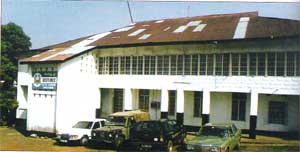 ange
by building mechanisms and putting in place procedures
and practices to ensure political control. Oversight
is to be vigilantly exercised by the government.
The MOD is developing a framework that will not
only assure openness and accountability, but also
will act to build and instil confidence in the
people of our nation. This Government is confident
thatits territorial integrity, sovereignty and
national core values can now be defended robustly
against any attack from external hostile aggressors
or threat from internal subversive and divisive
forces. Many important changes have been made.
What follows describes those changes. ange
by building mechanisms and putting in place procedures
and practices to ensure political control. Oversight
is to be vigilantly exercised by the government.
The MOD is developing a framework that will not
only assure openness and accountability, but also
will act to build and instil confidence in the
people of our nation. This Government is confident
thatits territorial integrity, sovereignty and
national core values can now be defended robustly
against any attack from external hostile aggressors
or threat from internal subversive and divisive
forces. Many important changes have been made.
What follows describes those changes.
THE
NEW MOD
3005.
It was clear from the outset that radical changes
were needed if the Government's policies and aspirations
for defence were to be realised. The old MOD building
lacked sufficient accommodation to house the number of staff that would be needed
for it to carry out its future role. New accommodation
had to be found, staff selected and trained. In
1999 His Excellency the President approached the
British Government for assistance. It agreed to
help. A small team of Defence Advisors was sent
to help with the creation of a new MOD. Plans
were put in place and recruitment commenced. By
May 2000 the number of staff employed by MOD had
risen to 35; a Director General, two Deputy Secretaries,
Six Directors and four Deputy Directors. They
were joined by 22 ancillary and support staff.
At this stage with the exception of a couple of
military advisors the MOD remained a wholly civilian
institution.
to house the number of staff that would be needed
for it to carry out its future role. New accommodation
had to be found, staff selected and trained. In
1999 His Excellency the President approached the
British Government for assistance. It agreed to
help. A small team of Defence Advisors was sent
to help with the creation of a new MOD. Plans
were put in place and recruitment commenced. By
May 2000 the number of staff employed by MOD had
risen to 35; a Director General, two Deputy Secretaries,
Six Directors and four Deputy Directors. They
were joined by 22 ancillary and support staff.
At this stage with the exception of a couple of
military advisors the MOD remained a wholly civilian
institution.
A
NEW BUILDING FOR MOD
3006.
The former Paramount Hotel was identified as a
suitable site to house the new MOD. The UK Department
for International Development (DfID) provided
funding to convert the Paramount Hotel. Work started
in February 2001. The project was completed in
December 2002 and His Excellency the President
officially opened the new MOD on the 21st January
2002.
INSTITUTIONAL
DEVELOPMENT
3007.
In concert with the construction work a programme
of institutional development was put underway.
Plans were developed to identify more civilians
and for military personnel to be posted as an
integral part of the new organisation. At the
same time a series of training courses, ranging
from Defence Diplomacy to computer and financial
skills were arranged for the new occupants, in
Sierra Leone and the UK.
A
CIVILIAN-MILITARY MOD
3008.
To complement the development of the new MOD both
civilian and military officers are now seen working
together in the new building. The Chief of the
Defence Staff (CDS) and his team of over 13 military
officers came over to work along side the Director
General and his civilian team. The effect of this
new atmosphere is the beginning of civil-military
co-operation that will provide a joint civilian-military
MOD under the direction of the democratically
appointed civilian political leaders. This result
is to be achieved with the help and advice of
the team of international military and civil advisors.
THE
CHALLENGE
3009.
Determining the future size and shape of the new
MOD was challenging. The Government needed to
provide a sound foundation on which to build an
effective Department of State capable of supporting
the new democratic and accountable Armed Forces.
Staffing structures were however agreed, functions
identified and effective efficient business processes
put in place.
3010.
In any democratic society, ultimate control of
the Armed Forces must be exercised on behalf of
the electorate by democratically elected politicians.
Ministers give direction to the Forces, who are
then responsible for the professional conduct
of operations in accordance with those directions.
Ministers need honest, impartial and professional
advice in reaching their decisions and this is
provided by a fully integrated structure of civilian
and military officials in the Ministry of Defence,
through whom Ministers exercise control of the
Forces. The close and interdependent nature of
this civilian-military partnership in the MOD
is epitomised by the relationship between the
civilian DG and the military CDS, neither being
subordinate to the other, but each dependent upon
the other and sharing responsibility for much
of the Department's business. Their roles reflect
the importance of both military and civilian advice
on political, financial, administrative and operational
matters.
3011.
The DG is accountable to Parliament for expenditure
of all public money voted for defence purposes.
This means that whilst ministers make policy decisions
on the allocation of resources, the DG is responsible
for ensuring that rigorous standards of propriety,
regularity, affordability and value for money
are applied to the expenditure giving effect to
those ministerial decisions. He is the MOD's Accounting
Officer reflecting his responsibility to ministers
for the overall organisation, management and staffing
of the Department and for financial procedures
and other matters.
3012.
CDS is the professional head of the Armed Forces
in Sierra Leone and the principle military adviser
to Defence Ministers and Government. The Chain
of command for the planning and conduct of military
operations flows from the Cabinet through the
Defence Ministers to CDS and from him to operational
commanders at various levels. His professional
advice is important in ensuring the provision
of the best possible military capability from
the funding available.
3013.
Both the Director General and the Chief of Defence
Staff have Civilian and Military Advisors to assist
them in the further development of the MOD. The
DG and the CDS are supported by two Deputy Secretaries
(DS) and two Assistant Chiefs of Defence Staff
(ACDS). Their role is to manage the day to day
business of the Ministry, allowing the Director
General and Chief of Defence Staff to concentrate
on longer term strategic challenges and issues.
3014.
The MOD now employs about 165 people. There is
a healthy blend of civilian and military staff
working in equal partnership throughout the organisation
with military personnel working in civilian-led
directorates and vice versa. A number of committees
have been set up to take forward departmental
business and implement government policy. IMATT
officers currently fill a number of the military
posts in the MOD, some of these being within the
Sierra Leone chain of command. However, once sufficient
trained and experienced Sierra Leone officers
are available, they will revert to a purely advisory
role. This process has already commenced. A mixture
of civil-military clerical and ancillary support
staff work at MOD. Further information detailing
the principal directorates and the work that the
various Defence Committees undertake can be found
at Appendix B and C respectively.
CIVILIANS
AND MILITARY PERSONNEL IN DEFENCE
3015.
Responsibility for formulating defence policy
rests with the Government. It is assisted in this
task by the Defence Council and the Defence Policy
and Operations Committee at MOD. The Office of
National Security (ONS) plays an important role
in the co-ordination of security matters and policy
initiatives, and the MOD therefore places a high
premium on maintaining close and effective relations
with the ONS. Officials working in the MOD help
ministers to implement policy on behalf of the
Government. For the first time military and civilians
are working together as never before in the national
interest. Civilian participation and political
primacy in developing an effective and efficient
institutional framework for defence is crucial
to its long-term success. All the key signs are
good; endeavours are ongoing and a democratically
accountable system is evolving, wherein civil/military
direction of military purposes is taking hold
through ministers appointed by due democratic
process, and an equal partnership of civilian
and military staff in MOD putting this into effect
on ministers' behalf. At one and the same time
this government recognises that competent guidance
and advice is vital for national security and
prosperity. It also recognises that there is still
someway to go before we can feel absolutely confident
that the advice MOD provides is sound, robust
and complete. We need to strengthen our administrative
processes and to eliminate bureaucratic delays
and inefficiency within the MOD, particularly
in procurement.
3016.
Clearly the return of political stability and
the recognition of the importance of civil control
of the military is enabling us to enjoy a degree
of equilibrium that we have not experienced for
many years. The government's determination to
have the final say on national security issues
and control over the Armed Forces marks another
important step on the road to success. We must
align our aspirations for a strong RSLAF with
financial reality. This Government is committed
to planning and driving through an affordable
but effective defence policy in the interest of
sustaining the peace and security we now enjoy.
Its views on that will be set out in the forthcoming
Defence Review. In this most important of tasks
we will be assisted by the military and the officials
who work alongside them in the MOD. All perform
vital tasks in support of the RSLAF. The new Ministry
of Defence offers a unique opportunity for civilian
and military personnel to work together to support
the country's interest. It is pivotal to our success
that the political class directs the military
through its representative, civil authority. In
this way both Parliament's and the Nation's interests
will best be served and we can avoid a return
to the dark years of the last decade.
CHAPTER
FOUR
THE
REPUBLIC OF SIERRA LEONE ARMED FORCES
THE
PRIMARY TASK
4001.
The RSLAF's primary role and mission is to defend
Sierra Leone's territorial integrity against external
aggressors. To achieve this RSLAF needs sufficient
forces to secure Sierra Leone's borders, land
area and territorial waters. RSLAF will be designed
and equipped to meet a range of military tasks.
This includes a robust maritime and air capability
to support the land forces. Currently the majority
of the RSLAF is deployed to operational areas
around the borders of Sierra Leone to deter external
threats. However, it is thought this role will
reduce over the next few years and that more troops
will be based in permanent barracks. In order
to meet these tasks the RSLAF needs a variety
of capabilities. The need for strong, professionally
trained, motivated and well-equipped Armed Forces
with a full range of military capabilities (including
engineering, logistics, medical, and communications)
will remain if the Government's policies and aspirations
for defence are to be realised and maintained.
MILITARY
AID TO CIVIL AUTHORITIES
4002.
It cannot be emphasized too strongly that responsibility
for internal security and al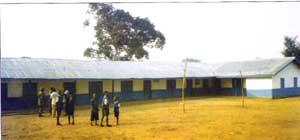 l
other civil matters rests with the civil authorities.
In other words, the only circumstances under which
the RSLAF may undertake internal security duties
will be when ministers have given explicit authorisation,
normally in response to a request from the civilian
Police, and invariably acting under Police primacy
of control. In a stable democracy, the Armed Forces
are the trusted guardians against external threat,
and internal security is left entirely in the
hands of the civilian Police. The Government is
determined that this will be the position in Sierra
Leone. l
other civil matters rests with the civil authorities.
In other words, the only circumstances under which
the RSLAF may undertake internal security duties
will be when ministers have given explicit authorisation,
normally in response to a request from the civilian
Police, and invariably acting under Police primacy
of control. In a stable democracy, the Armed Forces
are the trusted guardians against external threat,
and internal security is left entirely in the
hands of the civilian Police. The Government is
determined that this will be the position in Sierra
Leone.
4003.
That said, the RSLAF may also be tasked to assist
the Government in restoring law and order in situations
where civil authorities are unable to maintain
internal security. The RSLAF is a disciplined
force with a nation-wide command and control structure.
Its personnel are equipped with skills and resources
that can be utilised for non-military tasks in
support of the civil authority. When the RSLAF
is deployed in support of the civil authorities
the tasks it is capable of undertaking are wide-ranging
and diverse. For example, the RSLAF may be called
upon to help with reconstruction and rehabilitation
following a national emergency or it might be
used to assist in restoring law and order when
the civil powers (police) are over stretched and
unable to maintain internal security.
This Government recognises the valuable contribution
the RSLAF can make when supporting the civil authorities,
but in principle deems the use of the RSLAF for
other than military tasks as inappropriate, uneconomical
and politically undesirable. Against this the
Government recognises that in extremes such activities
may well be appropriate; particularly when they
are derived from capabilities which are pertinent
and unique to the RSLAF, but there are no specific
units, or equipment or other resources allocated
for this purpose. Support to the civil authorities,
when required, has to come from existing RSLAF
resources and these are provided in recognition
of their primary task not Military Aid. Strict
guidelines exist in order to protect funding allocated
for Defence tasks and to protect service personnel
from inappropriate commitments. Funding is tight,
and resources allocated by the government for
one purpose should not normally be reallocated
to another without political authority, albeit
that this may have to be retrospective in extreme
urgency. In most cases this will require the government
to make a compensating transfer of funds from
the beneficiary department to MOD. The RSLAF's
role in pioneering a Joint Maritime Capability
with other government departments provides just
such an example, where the Offshore Patrol Vessel
(OPV), Alimany Rassin, often assists the Marine
and Fisheries Department in apprehending and arresting
illegal fishing vessels or smugglers.
THE
INTERNATIONAL MILITARY ADVISORY AND TRAINING TEAM
(IMATT)
4004.
That the transformation has taken place and has
been a resounding success is in no small part
due to the work of the IMATT and its influence
in guiding and charting the Military Reintegration
Programme. But that is only one part of the success
story. The other is due to the willingness and
sincere desire of our soldiers and ex-combatants
to work together, put the past behind them and
work as one in the interest of the greater good
and our country.
4005.
The IMATT provides advice to the Government, MoD
and the RSLAF and achieves this by integration
within the RSLAF chain of command not simply as
advisors but as serving officers within the RSLAF.
IMATT officers are in command and staff positions
over RSLAF officers, warrant officers and senior
non commissioned officers and vice versa. This
strategy is considered vital to train Sierra Leonean
officers to take over these posts - a process
that is well underway. There is an inherent trust
and confidence among the people of Sierra Leone
that under this arrangement the transformation
to a democratic and accountable RSLAF will take
place all the sooner.
THE
STRUCTURE
4006.
The Government is building on what has been achieved
so far. The RSLAF still has someway to go before
it can settle down to a permanent cadre. The planned
Defence Review will determine the RSLAF's long
term future shape and size, but in the meantime
the process of restructuring the RSLAF is well
underway. Its combat capabilities have been assessed
in line with likely future operational activities
and a new interim structure has been evolved,
to meet the short to medium term requirements.
(See Appendix D)
JOINTNESS
4007.
On 21 January 2002 the Armed Forces of Sierra
Leone was officially renamed the Republic of Sierra
Leone Armed Forces in recognition of a new start
for a new force. At the same time the Defence
Headquarters ceased to exist and was replaced
by two organisations working in parallel, both
of which are subordinate to the Ministry of Defence.
These are known as HQ Joint Force Command (JFC)
and HQ Joint Support Command (JSC).
JOINT
FORCE COMMAND
4008.
The JFC brings the land, maritime and air components
of the RSLAF together under the operational command
of the Joint Force Commander who is responsible
for the planning and conduct of all RSLAF operations.
RSLAF operations are controlled from the Headquarters
of Joint Force Command in Cockerill Barracks,
Freetown. The creation of the Joint Force Command
enhances the capability of the RSLAF and ensures
maximum efficiency in the use of resources. United
under a single command headquarters, the land,
maritime and air components of the RSLAF work
together to guarantee the territorial integrity
of Sierra Leone and carry out the Defence Missions
and Military Tasks laid down by the Ministry of
Defence.
JOINT
SUPPORT COMMAND
4009.
As with JFC the Joint Support Command (JSC) was
established in January 2002. The JSC plays a crucial
role in all military operations by delivering
wide-ranging logistical, administrative and training
support to the RSLAF. JSC's importance in providing
tactical mobility and flexibility to our armed
Forces cannot be underestimated. Its key task
is to sustain the operability and capability of
troops on operations or training. The material
support it provides includes the acquisition,
storage, movement, distribution and disposition
of stocks or goods so that units can be issued
with the quantities they require in the correct
condition and at the right time and place. JSC
is also responsible for the movement, evacuation
and medical support of all personnel, including
the recovery and repair of equipment, maintenance
of infrastructure, training and the personnel
management and administration of all officers
and soldiers serving in the RSLAF.
CHAPTER
FIVE
DEFENCE
EXPENDITURE
5001.
Financial control and accountability plays an
important part in the overall control and accountability
of the RSLAF, and is exercised by Parliament through
the MOD where the DG carries overall responsibility.
There is a need to improve both the planning and
allocation of resources, and the oversight of
how or on what the money was spent. The Government
recognises that the RSLAF will not enjoy the confidence
and trust of the population at large unless its
use of the public's money is transparent and wholly
accountable.
5002.
The Government over the past two years has made
significant efforts to reintroduce practices and
procedures that will ensure that every Leone spent
on defence can be accurately accounted for. There
is still some way to go; particularly in developing
management information systems that can adequately
predict in-year spending and enable senior management
to take the decision necessary to contain expenditure
within the limits of the annual budget allocation.
In common with other departments, the current
financial system is centralist in nature and this
can lead to inefficiency and unnecessary bureaucracy.
Over the next few years, we intend to put in place
a system of financial delegations that will hold
managers accountable for the resources that their
duties make them responsible for in delivering
their mandated output; in short we want to match
accountability with responsibility.
MEDIUM TERM EXPENDITURE FRAMEWORK (MTEF)
5003.
In common with all other government ministries/departments,
the MOD prepares its detailed plans and estimates
for a 3-year period using the MTEF methodology.
Defence plans are intended to be supportive of
the Government's Poverty Reduction Strategy. The
MOD has adopted the MTEF process for the past
two years and, internally, has developed a robust
and transparent approach. The MOD issues detailed
Defence Planning Assumptions that are cascaded
to all Programme Managers who in turn produce
their detailed plans for costing. Through a series
of screenings, the Assumptions, Plans and Costings
are scrutinised to ensure that they are both affordable
and realistic. The approach provides Programme
Managers with an opportunity to justify their
resource requirements to senior management and
for senior management to prioritise in deciding
exactly where the limited funds available should
be allocated. These screenings were, and will
continue to be, conducted in the presence of the
Financial Secretary to ensure transparency.
THE
DEFENCE BUDGET
5004.
Providing the defence capability to protect our
national security interest is expensive. We recognise
this. We set out to minimise waste and deliver
the capability required in the most effective
way possible. Currently defence costs about Le
61.2 Billion per annum. After health and education
defence is the biggest spending area of government
and currently constitutes 12.3% of the total budget
for recurrent expenditure. This recognises that
the primary responsibility of government is national
security and this has a cost.
5005. The estimated requirement for total defence-related
expenditure for fiscal year 2002 is Le 91.108bn
of which 28.7% relates to salaries. However, the
total allocation for FY 2002 is currently Le 61.2bn
and this shortfall represents a significant challenge
to senior management. We are putting in place
robust management checks and the application of
rigid stores and accounting procedures to ensure
that our limited resources are not wasted. Value
for Money (VFM) is the key to our new financial
management strategy.
5006.
In pursuance of transparency and accountability
we intend to publish a detailed account of how
we intend to expend public funds on Defence. We
aim to publish these estimates after the proposed
Defence Review. They will project defence spending
over the next 3 years commencing with MTEF 2004.
DEFENCE
PROCUREMENT
5007.
The Ministry of Defence is responsible for ensuring
that all procurement is carried out consistent
with national policy and takes account of any
financial restraints. This means that the MOD
must ensure that the process of requirement scrutiny,
authorization and procurement is conducted with
due regards to propriety, regularity, affordability
and value for money.
5008.
Each year the MOD spends around Le 16 billion
on procuring equipment, stores and services in
support of the RSLAF. Earlier efforts to improve
guard against corrupt practices and develop a
system that delivers on time and to cost have
not been successful so the Government intends
to undertake a fundamental review of its procurement
procedures. It will aim to deliver high quality
equipment, cheaper and faster. A Procurement Working
Group was set up to re-think and reappraise the
way in which we run our procurement. The outcome
of this group was the formulation of a Procurement
Strategy which has since been approved and implemented.
The new strategy has reduced the time taken in
procurement by cutting the number of officials
and Departments involved in the process. This
has simplified the approval procedure and improved
the time from requirement specification to delivery
and reduces costs.
5009.
To remedy such weaknesses we intend to use the
Ministry of Defence to pilot a new system of public
sector managerial and financial delegations. This
will empower the Director General and his staff
and will give them autonomy not experienced before.
Importantly it will break down the centralized
bureaucracy typical in Sierra Leone.
5010.
The initial cost of equipment purchase is only
one part of the total cost. It can sometimes cost
more to maintain and operate than it cost to buy
in the first place, so procurement decisions must
be based on whole-life-costs. Every procurement
decision should be supported by an investment
appraisal (IA) comparing the full costs of all
alternatives - as for any expenditure decision.
The more complex projects or equipments will naturally
demand detailed IAs, but it will be important
to simplify the procedure for less complex items
where purchase price may well be the main factor.
Procurement itself is just one step in the overall
acquisition process that starts with initial concept
and requirement and then tracks the whole life
cycle, concluding with final disposal. The MOD
is already evolving a new acquisition policy,
including a new approach to procurement, and intends
to set new standards that will transform the way
we tackle defence procurement and set a benchmark
for the whole public sector.
5011.
As the Armed Forces are restructured new equipment
will be needed. Some of it may be donated freely
by friendly nations. Over the past few years we
have received significant financial and material
support from the United Kingdom. In 2001, this
contribution trebled the resources provided by
the Government of Sierra Leone. Whilst this support
was clearly welcomed, before accepting such gifts
in the future we will need to ensure we can afford
the running costs. It is possible that when these
costs are taken into account, even donated equipment
can become too expensive.
5012.
The above illustrates the areas where we will
be looking in order to achieve faster, cheaper
and better procurement for the RSLAF. As an early
step, we plan to delegate responsibility for all
capital purchases up to and including Le 25M.
The previous limit was Le12.5M. This figure will
be reviewed and if appropriate increased. Indeed
it is our intention to delegate the whole of the
Defence Budget once we are satisfied that the
right checks and balances are in place. In the
meantime we will look to the Procurement Working
Group (PWG) to process all (request) procurement
expeditiously. As part of this we would expect
them to inform the Equipment Approvals and Procurement
Committee of their actions. Only where expenditure
was considered unusual would prior reference to
the Equipment Approvals and Procurement Committee
(EAPC) be necessary. The EAPC would then seek
approval from the Central Tender Board. With unusual
items they would go to the Minister of Defence.
CATEGORIES
OF EQUIPMENT
5013.
The RSLAF's requirements can be divided into capital
and recurrent items.
a.
Capital. These are items that generally provide
repeated or continuous use over the longer term,
tend to be more expensive, and will probably have
residual value after use. They are categorised
as classified or unclassified in security terms.
The classified include, arms, weaponry, helicopter
gun ships, armoured vehicles and communications
equipment; the unclassified, furniture, office
equipment, boots and uniforms. The procurement
process for these items begins with an Operational
Requirement which has to be endorsed as first
being a capability needed to meet an identified
threat, and second as warranting an appropriately
prioritised position in the financial planning
process. The Equipment Approvals and Procurement
Committee (EAPC) is a high level body within the
MOD that has to approve all major purchases.
b.
Recurrent. These are consumable items that are
routine in nature. They include stationery, foodstuffs,
fuel, ammunition and lubricants. For recurrent
expenditure the procurement process begins with
the JSC/JFC approving the requirements of the
various Units.
DEFENCE
ESTATES
5014.
The war has ravaged the Defence Estate. Many barracks
were destroyed or rendered uninhabitable. Internally
displaced people forced from their homes by the
war sought shelt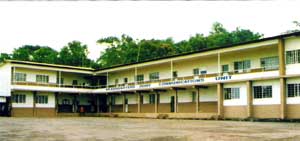 er
in the deserted barracks. This together with poor
management and control has resulted in ill-defined
boundaries, encroachments, and dilapidation and
wide spread infrastructure collapse. The United
Nations Mission in Sierra Leone has also occupied
some barracks and defence property where it is
habitable. In general, barracks are occupied by
a random collection of individuals and units.
In Freetown, the barracks are overcrowded and
military personnel can be found living in almost
every part of the city. This Government has set
about improvements, but progress has been and
will be slow due to the high cost of the repairs
and a shortage of funding. er
in the deserted barracks. This together with poor
management and control has resulted in ill-defined
boundaries, encroachments, and dilapidation and
wide spread infrastructure collapse. The United
Nations Mission in Sierra Leone has also occupied
some barracks and defence property where it is
habitable. In general, barracks are occupied by
a random collection of individuals and units.
In Freetown, the barracks are overcrowded and
military personnel can be found living in almost
every part of the city. This Government has set
about improvements, but progress has been and
will be slow due to the high cost of the repairs
and a shortage of funding.
5015.
Restoring the estate represents a real challenge
to the MOD, but we are determined to improve the
quality of the estates infrastructure so as to
support the delivery of the defence capability
required of the RSLAF within the allocated budget.
A Directorate of Defence Estates has been set
to centrally manage and oversee the repair and
restoration programme and to produce a Strategic
Restoration Plan, with milestones, performance
measures and target objectives. The plan will
spell out the Ministry of Defence's priorities
for improving accommodation facilities for the
RSLAF and will demonstrate to the people of Sierra
Leone that public funds are being judiciously
and effectively used.
MANAGEMENT
AND THE DEVELOPMENT OF DEFENCE ESTATES
5016.
The day to day management of all Defence Estates
property is effected through the Joint Support
Command HQ on behalf 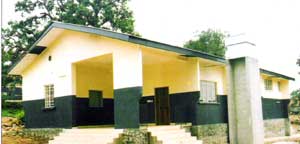 of
the Ministry of Defence. This includes maintenance,
repair, allocation and the provision of barracks
services. In terms of the development of the Defence
Estates we intend to undertake projects of rehabilitation
and construction to demonstrate Government's commitment
to providing better and improved accommodation
facilities for the RSLAF that will enhance their
effective performance. Owing to the budgetary
constraint the MOD is faced with, work on the
Defence Estates will be prioritised in order to
achieve maximum value for money. of
the Ministry of Defence. This includes maintenance,
repair, allocation and the provision of barracks
services. In terms of the development of the Defence
Estates we intend to undertake projects of rehabilitation
and construction to demonstrate Government's commitment
to providing better and improved accommodation
facilities for the RSLAF that will enhance their
effective performance. Owing to the budgetary
constraint the MOD is faced with, work on the
Defence Estates will be prioritised in order to
achieve maximum value for money.
5017.
The first priority area that is being considered
includes the provision of basic water supply and
sanitation; structural repairs and waterproofing
of viable existing buildings including married
quarters and the provision of limited electricity.
Accommodation at the Unit level will be supplemented
by tentage in the first instance, particularly
for single living accommodation, which is almost
non-existent. Camp areas will be cleared and made
safe by demolishing non-viable buildings and the
removal of abandoned equipment. An estate asset
register will be created and maintained to ensure
accountability. Priority will be given to construction
of simple new buildings to replace tentage and
poor quality structures and provide additional
working facilities that will allow migration of
Units and Headquarters to operationally appropriate
sites.
AUDIT
5018.
A robust and effective audit capability is the
key to ensuring corruption and fraud are minimised.
The Government intends, with external assistance,
to train and transform its audit staffs into professional
and effective auditors. There are two essential
areas to be addressed. The first is to ensure
that systems are in place with appropriate cross
checks, separation of functions and audit trails;
the second is to ensure that these systems are
then complied with. Once the basic audit structure
is in place, we intend to extend it to cover value
for money, effectiveness, and achievement of objectives.
CHAPTER
SIX
DEFENCE
SUPPORT
HEALTH
AND WELFARE SUPPORT
6001.
The purpose of the Defence Medical Services (DMS)
is to provide high quality medical care to the
Armed Forces and their families in peace and war,
wherever needed. It forms part of JSC. The health
and well being of our troops is a key component
of operational success. Currently medical support
falls short of that required. Recent action to
recruit more doctors into the RSLAF has met with
some success, but more needs to be done. With
this in mind the Government recently approved
a sponsorship scheme whereby, medical students
in return for serving for an agreed period in
the RSLAF after they qualify will receive a grant
to help them meet their study costs. This initiative
has met with some success but further work is
required.
6002.
The Government intends to adopt a health and welfare
strategy that is comprehensive and effective.
It intends to provide not only remedial medical
care to our troops but also ensure an active preventive
approach limiting vulnerability to disease. This
will include training in all aspects of health
education, including health and safety at work
and disease and injury prevention. In parallel
with this the Government intends to introduce
a sound management and records system into the
DMS to ensure its effective administration appropriate
to the RSLAF. This is a vital part of our commitment
to the RSLAF and needs reform.
6003.
We are committed to developing an autonomous RSLAF
medical service. However, to meet our obligations
some patients will be referred to public or private
hospitals. Also, the DMS provides primary, secondary
and tertiary health care consistent with national
health policy. Providing primary health care for
the RSLAF is a top priority whether on operations
or in peace. In all circumstances the RSLAF will
encounter a wide range of potential danger. The
DMS has to provide the best medical from the limited
resources, financial and human now available.
Further information on the work of DMS can be
found at Appendix E.
RSLAF
AND HIV/AIDS
6004.
In consonance with the National HIV/AIDS Policy,
the RSLAF has realise that however successful
programmes like the MRP and IMATT training initiatives
are, the HIV/AIDS epidemic threatens the viability
and effectiveness of the Armed Forces by potentially
robbing us of our most productive and highly trained
personnel. We fully recognise the threat pose
by the HIV/AIDS pandemic and are determined to
implement a coordinated programme in partnership
with appropriate external agencies to successfully
combat this threat within the service. An HIV/AIDS
Policy aimed at guiding Commanders and Service
Welfare Agencies in combating the spread of AIDS
within the RSLAF has been formulated and is being
implemented with assistance from external agencies.
6005.
In order to support the work of the DMS, the RSLAF
will establish an Armed Forces HIV/AIDS Council
in delivering an AIDS prevention programme. This
Council will work closely with external agencies
such as the National AIDS Council, Ministry of
Health, and all other non-governmental organisations
and donor agencies interested in the combat of
this disease. The Council will also support the
mainstream national development process in this
area and shall develop programmes that are time
bound with measurable goals and objectives.
TERMS
AND CONDITIONS OF SERVICE (TACOS)
6006.
The MOD is working in close collaboration with
other ministries to ensure that the Terms and
Conditions of Service (TACOS) for RSLAF personnel
are in all respects unambiguous, fair and above
all relevant to ensure the loyalty, active support
and contentment of officers and soldiers alike.
This will include a full review of the pay, pensions
and allowances structures, leave, resettlement
and medical entitlements and a fundamental overhaul
of the promotion and career opportunities available
within the RSLAF. MOD is putting up structures
that will ensure that the TACOS are attractive
enough to recruit, motivate and retain the high
grade individuals required to implement many of
the proposed changes to make sure that the RSLAF
remains effective, efficient and sustainable over
the longer term.
CHAPTER
SEVEN
CONCLUSION
7001.
This White Paper establishes a broad policy framework
for defence in Sierra Leone, based on the principles
of good governance and should provide the basis
for informed debate. It sets the scene for a later
more detailed review of the nation's defence requirements.
That review will be conducted in stages as part
of the Government's commitment to poverty reduction
and will be published in 2004. Before publication
we will seek opinion from the people and engage
them in the defence debate by explaining the role,
function, size, shape, posture and approach of
our Armed Forces. In this way we hope not only
to inform the people of how we the Government
are thinking about defence, but also gain an understanding
of their aspiration for it.
7002.
This White Paper is part of that process. By setting
out the threats and challenges we face and describing
how our Armed Forces are designed to meet them,
we hope to engage you, the people of Sierra Leone,
in our improvement. Acknowledging that the government
does not have a monopoly of knowledge on defence
issues, we recognise that everyone has a right
to participate and have a voice in the formulation
of defence policy. This White Paper also signals
to the International Community that Sierra Leone
is committed to democracy, good governance and
to achieving the goals set out in its Development
Plan. We aim to prosper and succeed, to be a force
for good, and a model to other Sierra Leone ministries.
7003.
In producing this White Paper the Government has
set out to explain to you the people of Sierra
Leone its expectations and aspirations for defence.
It has described the structure and role of the
military and the threats and challenges we face
as a nation. It has set out how our Armed Forces
are equipped and are training to meet that challenge.
The processes and systems we are putting in place
will lead not only to an accountable, transparent
and loyal RSLAF, but also a more efficient and
effective management system to direct and then
resource them. The Government believes that a
transformation is already underway. This is founded
on sound policy and good governance. This White
Paper is part of that process.
CONTACT:
Please send your views, comments and opinions
on the issues raised in this document to:
The
Director of Defence Policy,
Ministry of Defence,
Tower Hill, Freetown, Sierra Leone
or by e-mail to [email protected]
|


